Sometimes the most helpful thing someone can say isn't "here's what you should do." It's "I've been there too."
That's peer support in a nutshell. It's people helping people, because they've lived through something similar and come out the other side. And that matters more than you might think.
It Starts With Shared Experience
Peer support is built on one simple idea: when you're going through something hard, it helps to talk to someone who actually gets it. Someone who felt it, struggled with it, and found a way forward.
That could be someone who's been through depression, addiction, grief, a serious illness, a difficult relationship, or any number of life challenges. Whatever the struggle, knowing that the person across from you has walked something similar makes it easier to open up. You don't have to explain yourself from scratch. You don't have to worry about being judged.
What Does it Actually Look Like?
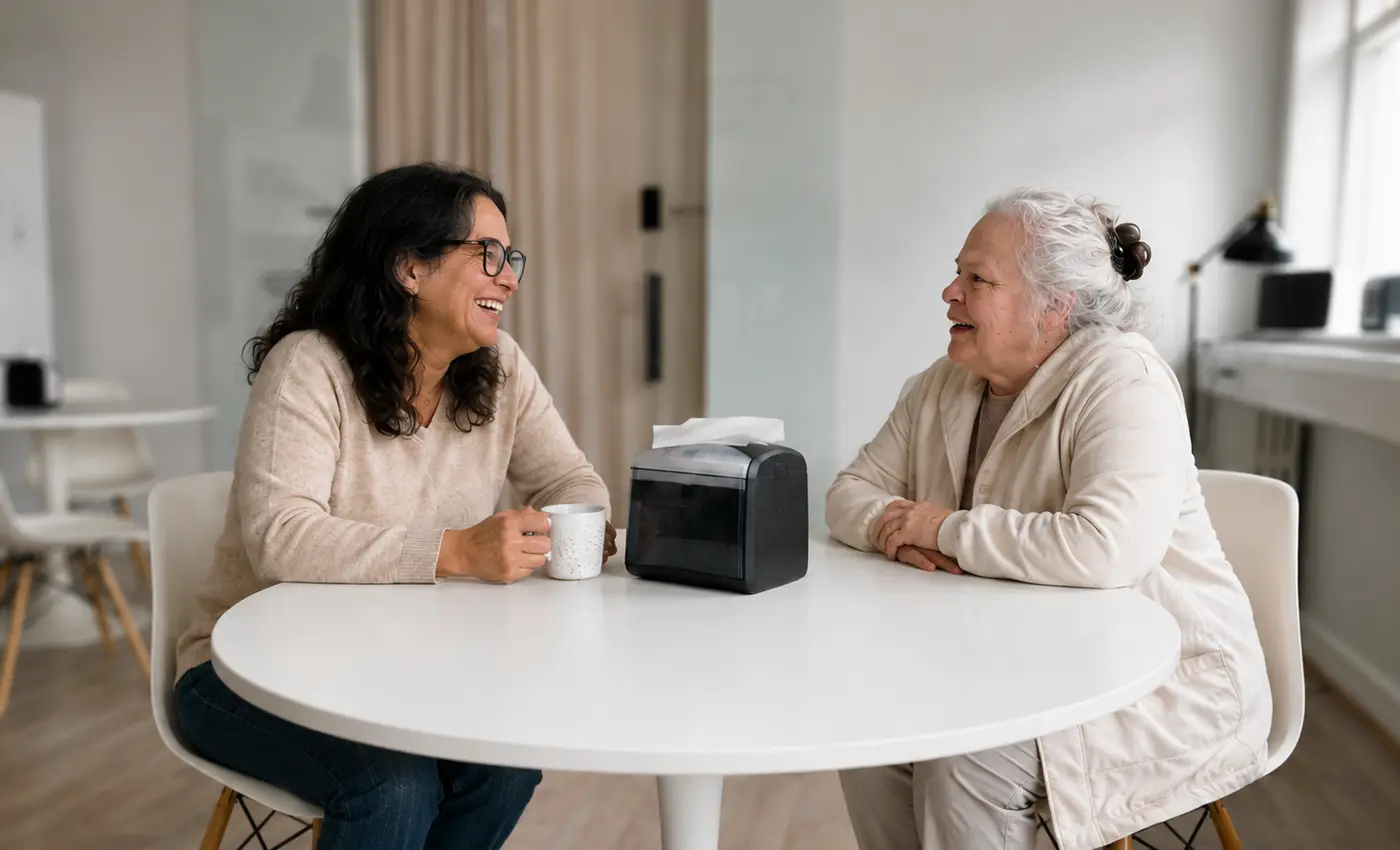
It can take a lot of different forms. Sometimes it's a one-on-one conversation, a peer supporter who meets with you regularly to check in, listen, and share what worked for them. Sometimes it's a group setting, where people gather (in person or online) to talk through what they're dealing with and hear from others in similar situations.
Some organisations use a specific approach called Intentional Peer Support (IPS). This framework was developed to make peer support more than just a friendly chat, it gives the conversation structure and purpose, while keeping it grounded in lived experience rather than clinical advice. The focus is on connection, learning, and moving forward together, not fixing, diagnosing, or telling someone what to do.
But even outside of formal frameworks, peer support shows up everywhere: in community groups, helplines staffed by people with lived experience, support programmes in hospitals, schools, and workplaces, or simply a friend who's been through something you're now facing.
What Makes It Different From Therapy?
Therapy and counselling are valuable, and peer support isn't trying to replace them. They do different things.
A therapist is trained to help you understand patterns in your thinking, work through trauma, or manage mental health conditions. That's incredibly important work. But a therapist hasn't necessarily been through what you're going through. There's a professional distance, which can be helpful, but it can also feel hard to cross. A peer supporter can close that distance.
The two can work well together. A lot of people find that peer support gives them something to hold onto between therapy sessions, or helps them get to the point where they feel ready to seek professional help in the first place.
Why It Works
There's something powerful about hearing someone say: "I felt that way too."
It doesn't fix everything. It's not meant to. But it chips away at one of the heaviest parts of struggling, the feeling that you're alone in it, that no one could possibly understand, that something must be wrong with you for feeling the way you do.
Peer support works because it's honest. A peer supporter isn't performing wellness or reciting advice from a pamphlet. They're telling you about their own mess, the hard bits, the setbacks, the small things that helped. That realness is hard to replicate. It makes the support feel less like guidance and more like company.
It also works because it's equal. In most helping relationships, there's a clear power dynamic, one person has the answers, the other needs them. Peer support flips that. Both people bring something to the table. Both people learn something. That can feel surprisingly freeing.
Who Is Peer Support For?
Anyone. Seriously.
It's been used effectively for people dealing with mental health challenges, addiction and recovery, long-term physical health conditions, grief and bereavement, trauma, postnatal difficulties, and lots more. It shows up in hospitals, prisons, schools, community centres, and online spaces.
The one thing all of these have in common is that the people giving support have been through something difficult and they've chosen to use that experience to help someone else through it.
A Note on the People Who Give Support
Being a peer supporter isn't easy. It takes courage to revisit your own struggles in order to help someone else. It takes patience to sit with someone who's hurting and not rush them toward an answer. It takes self-awareness to know when you need to step back and look after yourself too.
Good peer support programmes train their supporters. They make sure people have the tools to handle difficult conversations, know where to signpost if someone needs more specialised help, and have their own support in place so they don't burn out.
The Bottom Line
Peer support is simple at its heart, but that doesn't make it small. Connection is one of the most powerful things we have. When you find someone who truly understands what you've been through, something shifts. The weight gets a little lighter. The path forward looks a little clearer.
It's messy and human and sometimes imperfect. But so is everything worth anything.
That's what makes it work.
Online Peer Support at Mental Bytes
Visit our online peer support page for more information, or to book a session with one of our trained peers.